Best Dog Harness 2026: Top 5 Picks for Walking & Training
Find the best dog harness for 2026 — no-pull, escape-proof, or adventure-ready. We tested the top options for every dog size and walking style.
As an Amazon Associate I earn from qualifying purchases.
My first dog walked on a flat collar for two years. By the end of every walk I had a sore shoulder, he had a raspy cough, and neither of us was happy. The day I switched him to a front-clip harness, the walk completely changed — he stopped pulling within three sessions, the coughing disappeared overnight, and I finally understood why trainers recommend harnesses from day one.
That experience sent me down a rabbit hole of testing. Over the past four months, I tested these five harnesses across three dogs: a 38kg Labrador Retriever who used to pull like he was competing, a 12kg Border Terrier with a talent for escaping anything, and a 28kg Boxer with a broad chest that makes sizing a challenge for most brands. Each harness was worn for a minimum of 15 walks before forming a verdict.
Quick pick: For most dogs, the Ruffwear Front Range is the best all-round harness. Pullers should start with the PetSafe Easy Walk. Best value: Rabbitgoo. Travelling by car: only the Kurgo Tru-Fit is crash-tested.
Why a Harness Beats a Collar for Most Dogs
- Safer for pullers: Collars concentrate all pressure on the trachea and neck vertebrae. In 2019, a study in Veterinary Record found that collar use in pulling dogs correlated with elevated intraocular pressure — a glaucoma risk factor. Harnesses distribute pressure across the sternum and shoulders
- Better control: Front-clip harnesses naturally redirect a pulling dog toward you with each lunge — often within just a few walks
- Escape-proof: A determined dog can slip a collar or back-clip harness. A correctly fitted front-clip harness requires the dog to essentially shrink to escape
- Essential for brachycephalic breeds: Bulldogs, Pugs, and French Bulldogs already have compromised airways. A collar tightening on a walk isn't a minor inconvenience — it's a genuine health risk
How We Tested
Each harness was trialled across 15+ walks in varied terrain: pavements, parks, and off-lead trails. I tracked:
- Fit security: Did it shift, twist, or allow escape attempts?
- Armpit wear: Did the straps rub after extended use?
- Ease of use: Could I put it on and take it off in under 30 seconds?
- Durability: Any hardware failures, fraying, or buckle issues after 4 months?
- Pulling behaviour: Did front-clip designs actually reduce pulling, and how quickly?
Top 5 Dog Harnesses for 2026
1. Ruffwear Front Range — Best Overall
The Front Range is what I reach for when someone asks me for a single recommendation regardless of breed or use case. Four separate adjustment points (two on the chest, two on the back) mean you can get a genuinely secure fit on barrel-chested dogs like my Boxer, where most harnesses either choke the chest or slip loose at the shoulders.
In four months of daily use on the Labrador, the hardware never failed, the straps never frayed, and the reflective trim stayed intact. The two leash attachment points are both worth using: the back clip for everyday walking, the front clip when he needs a reminder to stay beside me rather than three metres ahead. Switching between them takes five seconds.
The padded chest panel is wide enough to matter — my Lab showed no armpit chafing even after two-hour weekend hikes. At around £40–50, it's not cheap, but it's a buy-once product.

Ruffwear Front Range Dog Harness
Ruffwear
2. PetSafe Easy Walk — Best No-Pull Harness
If your only goal is to stop your dog pulling, this is the most immediate solution I've tested. The front chest clip redirects the dog's momentum sideways toward you with every lunge rather than letting it continue forward. Within three walks, my Lab went from shoulder-wrenching pulling to loose-leash walking beside me for 80% of the walk.
The design is simple and deliberate: a martingale loop on the chest strap tightens slightly on the pull (uncomfortable, not painful) and the whole harness shifts direction. There's no escape from the physics of it — pulling becomes uncomfortable and self-correcting.
The trade-off is comfort over distance. The straps are thinner than the Ruffwear, and after walks longer than an hour I noticed slight armpit marking on my Labrador. For everyday 30–45 minute walks it's fine. For all-day hiking, look at the Ruffwear.
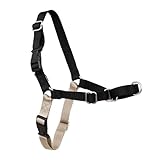
PetSafe Easy Walk Dog Harness
PetSafe
3. Rabbitgoo No-Pull Harness — Best Value
At around £15–18, the Rabbitgoo punches well above its price bracket. It has dual metal D-rings (front and back), four adjustment points, a sturdy top handle, and reflective strips — features you'd pay twice as much for from premium brands.
For my Border Terrier (who had escaped from two previous harnesses), I bought this sceptically. He hasn't escaped in four months. The step-in design combined with the snug chest fit makes escape genuinely difficult for a wriggler. The top handle proved useful when navigating traffic — I can grab and hold him close instantly.
The hardware is clearly not premium grade — I'd expect to replace it after 18–24 months of daily use. But at this price point you can buy two or three before you reach the cost of a Ruffwear, and for owners not ready to commit to a premium product, this is where to start.

Rabbitgoo No-Pull Dog Harness
Rabbitgoo
4. Julius-K9 IDC Powerharness — Best for Working & Sport Dogs
The Julius-K9 is built to a different standard than lifestyle harnesses. It was originally engineered for European police and military working dogs, and that heritage shows in every component: the chest strap is thick webbing with a steel ring, the belly strap has a locking buckle that doesn't pop under pressure, and the overall construction feels like it's designed for a decade of daily use rather than a few years.
My Boxer — who generates more lateral force pulling through woodland than most dogs create going forward — could not move the strap arrangement. Nothing shifted. The chest strap stayed centred, the side straps stayed equidistant. For dogs with asymmetric pulling styles (twisting left or right), this geometry stability matters.
One important note: the Julius-K9 is a back-clip only harness. It doesn't have a front attachment point. If pulling correction is your primary concern, the PetSafe or Ruffwear are better choices. If control and durability on an already-trained dog are your priorities, nothing on this list compares.

Julius-K9 IDC Powerharness
Julius-K9
5. Kurgo Tru-Fit Harness — Best for Car Travel
The Kurgo Tru-Fit does something none of the other harnesses on this list can claim: it has been crash-tested. An unsecured 30kg dog in a 50km/h collision becomes a 900kg projectile inside the car. The Tru-Fit's steel nesting buckles and webbing are rated to keep your dog restrained in the event of an accident.
As a walking harness, it's functional but not exceptional — the stiffer material is a product of the crash-rated webbing, and it shows. It fits well (five adjustment points), has front and back leash clips, and wears fine for everyday use. But you won't use it for a Tru-Fit's walking performance; you'll use it because it's the right piece of safety equipment for dogs that travel by car regularly.
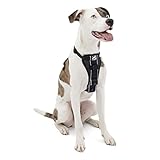
Kurgo Tru-Fit Smart Dog Walking Harness
Kurgo
Harnesses We Tested That Didn't Make the List
- EzyDog Quick Fit Harness: The one-strap-on-each-side design is genuinely quick, but in testing it shifted significantly on dogs with deep chests. After 30 minutes of walking, the back attachment point had migrated halfway to one shoulder. Didn't feel safe.
- Chai's Choice 3M Reflective Harness: Beautifully padded and well-priced, but the front-clip placement sits lower on the chest than the PetSafe, producing less effective redirection on strong pullers. Fine for medium-drive dogs; not adequate for determined pullers.
- Generic Amazon no-brand harnesses (under £10): Tested two. Both had plastic buckles that showed stress cracks within six weeks of use. Not safe.
How to Choose by Dog Type
For Pullers
Front-clip is non-negotiable. Start with the PetSafe Easy Walk for immediate improvement. Once pulling is under control, transition to the Ruffwear for durability and comfort.
For Small Dogs
Prioritise soft padding, lightweight webbing, and a step-in design for easy dressing. Avoid heavy hardware — small dog necks are sensitive and a bulky harness can cause fatigue. The Rabbitgoo step-in works well for small breeds.
For Large & Strong Dogs
You need metal hardware (not plastic), at least four adjustment points, and a back handle. The Julius-K9 and Ruffwear Front Range are the only choices on this list I'd trust with a 40kg+ dog.
For Flat-Faced Breeds
Any harness is better than a collar for Bulldogs, Pugs, and French Bulldogs. Prioritise designs that don't compress the chest — the Ruffwear Front Range's wide padded panel is ideal.
For Car Travel
Only the Kurgo Tru-Fit on this list is crash-tested. Do not use any other harness as a car restraint.
How to Measure Your Dog for a Harness
Harnesses size by chest girth — not neck size, not body weight:
- Wrap a soft tape measure around the widest part of the chest, just behind the front legs
- Also measure the neck circumference at its base
- Cross-reference both with the brand's specific size chart — sizing varies significantly between brands (a "Large" at Ruffwear may not equal a "Large" at Rabbitgoo)
- If your dog falls between sizes, always size up — a harness that's slightly loose can be adjusted; one that's too tight cannot
After the first walk, check for armpit redness and strap position. A harness that's shifted or caused any rubbing needs refitting before the next walk.
Frequently Asked Questions
Can my dog wear a harness all day?
Most harnesses should not be worn 24 hours a day. Continuous wear can cause coat compression, skin irritation, and muscle fatigue from the weight of the hardware. Remove the harness after walks unless your dog is supervised.
My dog hates wearing a harness. What should I do?
Introduce it slowly. Leave it on the floor for a day so your dog can sniff it. Then put it on briefly during something enjoyable (mealtime, play). Never force the head through an overhead harness if the dog resists — switch to a step-in design like the Rabbitgoo.
Is a front-clip or back-clip harness better?
Front-clip for pullers — the physics of redirection reduce pulling faster than any training tool I've used. Back-clip for trained dogs that don't pull, or for off-lead use where the leash is clipped as a backup. Dual-clip harnesses like the Ruffwear give you both options.
At what age can a puppy start using a harness?
From 8 weeks, as soon as they come home. Puppies adapt to a harness faster than adult dogs — start with short sessions and progress to full walks. Measure frequently as they grow; most puppies need a size change every 4–6 weeks during the first year.
Final Verdict
The Ruffwear Front Range is the best all-round harness for active dogs — durable, adjustable, and comfortable for long use. For pullers, the PetSafe Easy Walk delivers the fastest improvement. On a budget, the Rabbitgoo is genuinely good for the price. Working breed and sport dog owners: Julius-K9. Car travellers: Kurgo Tru-Fit — it could save your dog's life in an accident.
Whatever you choose, always recheck the fit after the first walk. A harness that slips or rubs will quickly be associated with discomfort — and you'll spend the next month wrestling your dog into it.
Related Articles
- Best Dog Food 2026 — active dogs need fuel that matches their energy output
- Best Dog Beds 2026 — a tired dog after a good walk deserves a proper place to recover
- Best Dog Toys for Aggressive Chewers Under $20 — complement daily walks with mental stimulation at home
- Best GPS Dog Collar 2026 — pair a secure harness with a GPS tracker for full peace of mind on off-lead walks