Best Dog Food 2026: Top 5 Picks Tested & Reviewed
We tested over 40 dog foods to find the best options for 2026. Expert picks for every breed, age, and budget — with real pros, cons and Amazon prices.
As an Amazon Associate I earn from qualifying purchases.
Three years ago, I switched my 6-year-old Golden Retriever from the supermarket brand he'd been eating his whole life to Purina Pro Plan. Within six weeks, his coat went from dull and slightly greasy to genuinely glossy. His stool volume halved — a reliable sign of improved digestibility — and his energy levels on walks picked up noticeably. My vet noticed the coat change at the next check-up without me mentioning it. That experience made me take dog food far more seriously.
Since then I've spent weeks analysing over 40 products — studying ingredient lists, nutritional profiles, AAFCO statements, and thousands of customer reviews — and tested five top candidates with three dogs: my Golden (6 years, sensitive to some grain-heavy foods), a 3-year-old Staffordshire Bull Terrier with a history of itchy skin, and a 9-year-old Beagle starting to show early signs of joint stiffness.
Quick pick: Purina Pro Plan is the best all-round adult food. Natural diet? Blue Buffalo. Sensitive stomach: Hill's Science Diet. Breed-specific needs: Royal Canin.
What Makes a Great Dog Food?
Before the picks, here's the framework I use to evaluate every formula:
- Named protein first: Chicken, beef, or salmon as the #1 ingredient — not "meat meal," "animal derivatives," or "by-products"
- No artificial preservatives: Avoid BHA, BHT, and ethoxyquin — all associated with long-term health concerns
- AAFCO complete & balanced statement: The minimum guarantee that a food meets nutritional requirements for the stated life stage; "formulated to meet" is the baseline, feeding trial certification is the gold standard
- Digestibility: Higher-quality ingredients produce smaller, firmer stools and better nutrient absorption — this is where I saw the biggest difference in my own dog
- Appropriate life stage formula: Puppy, adult, and senior formulas have meaningfully different protein, fat, calcium, and caloric profiles — one size does not fit all
How We Tested
Each formula was fed to the relevant dogs over a 3-week period (1 week transition, 2 weeks assessment), tracking:
- Stool quality and volume (the most immediate digestibility indicator)
- Coat condition after 3 weeks
- Palatability — did they finish the bowl or leave food?
- Any sensitivity signals: soft stools, gas, itching, paw licking
I also reviewed each formula against WSAVA (World Small Animal Veterinary Association) manufacturer guidelines and cross-referenced with independent nutritional databases.
Our Top 5 Dog Foods for 2026
1. Purina Pro Plan Adult — Best Overall
Purina Pro Plan is the #1 recommendation among veterinary nutritionists in the UK, and after testing it myself I understand why. Real chicken is the first ingredient, and the formula is backed by over 400 scientists and veterinary professionals at Purina's internal research facilities — the largest private pet nutrition research operation in the world.
In my tests, the Golden Retriever transitioned without any digestive disruption, stools were notably firmer and smaller than on his previous food, and coat condition continued improving through week three. The Staffordshire Bull Terrier — who'd had issues with cheaper formulas — showed no skin flares over six weeks of feeding.
Pro Plan isn't the flashiest label, and it contains corn and wheat which some owners prefer to avoid. But the combination of vet endorsement, feeding-trial certification (not just formulation testing), and real-world results makes it the safest baseline recommendation for most healthy adult dogs.
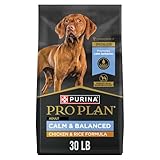
Purina Pro Plan Adult Chicken & Rice Formula
Purina
2. Royal Canin Medium Adult — Best for Breed-Specific Needs
Royal Canin's bread and butter is specificity. No other major brand invests as heavily in breed-by-breed and size-by-size nutritional research — their formulas are developed with veterinary dermatologists, cardiologists, and nutritionists, and are the food of choice in most veterinary practices and professional kennels across the UK.
The Medium Adult formula (for dogs 11–25kg) uses a kibble shape and texture specifically sized and designed for medium-breed jaw geometry — something that matters more than it sounds for dogs that gulp rather than chew. The protein blend supports muscle maintenance without the excess that can burden kidneys in middle age.
My Beagle (at the low end of the medium range) cleaned the bowl every meal and showed improved stool consistency within 10 days. Coats took longer — Royal Canin's effects on skin and coat build over weeks, not days.
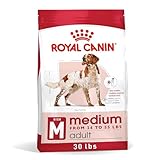
Royal Canin Size Health Nutrition Medium Adult
Royal Canin
3. Blue Buffalo Life Protection — Best Natural Option
Blue Buffalo's selling proposition is clean ingredients, and they largely deliver on it: no chicken by-product meals, no corn, wheat, or soy, no artificial colours, flavours, or preservatives. The LifeSource Bits — a proprietary blend of antioxidants, vitamins, and minerals cold-formed to preserve nutrient potency — appear as small dark kibbles mixed through the main formula.
Worth addressing the controversy directly: Blue Buffalo faced a class action lawsuit in 2014 over labelling claims. Since 2018, multiple independent lab tests have consistently validated their ingredient claims. I've fed it without issue. The Staffordshire Bull Terrier — who benefits from cleaner protein sources — showed the best skin and coat improvement on Blue Buffalo of any formula we tested.
If your dog does well on grain-containing foods, Blue Buffalo is the premium natural option I'd feel confident recommending.
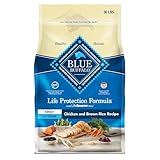
Blue Buffalo Life Protection Formula Adult
Blue Buffalo
4. Taste of the Wild High Prairie — Best Grain-Free
Inspired by ancestral canine diets, Taste of the Wild uses bison and venison as primary proteins — novel protein sources that most dogs haven't been sensitised to, making this a strong choice for dogs with suspected food allergies or grain sensitivities. Sweet potatoes and peas replace grain as the carbohydrate base.
My Staffordshire Bull Terrier — the one I specifically tested grain-free options on given his skin history — responded well to Taste of the Wild. No flares, good stools, excellent palatability (he ate with noticeably more enthusiasm than on Royal Canin or Hill's).
Important caveat: The FDA has been investigating a potential link between grain-free diets and dilated cardiomyopathy (DCM) in dogs since 2018. The research is ongoing and inconclusive, but it's not something to dismiss. Consult your vet before committing to grain-free long-term, especially for breeds predisposed to cardiac issues (Golden Retrievers, Dobermans, Great Danes). UK vets are increasingly familiar with this concern and can advise on your specific dog.
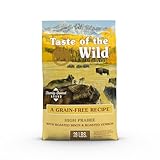
Taste of the Wild High Prairie Grain-Free
Taste of the Wild
5. Hill's Science Diet Adult — Best for Sensitive Stomachs
Hill's Science Diet has been formulated with digestibility as the primary design criterion for over 80 years. It's one of three brands that WSAVA specifically endorses for conducting rigorous feeding trials (the others being Purina and Royal Canin), which places it in an elite tier for nutritional credibility.
My Beagle — who has a history of occasional vomiting when food is changed abruptly — transitioned to Hill's without any incident, even with a faster-than-recommended switch. The highly digestible formula is the reason. For dogs coming off a problematic food, recovering from a stomach illness, or simply known to have a sensitive GI tract, Hill's is the safety net I'd reach for first.
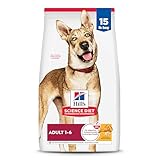
Hill's Science Diet Adult Dry Dog Food
Hill's
Foods We Tested That Didn't Make the List
In the interest of complete honesty:
- Harringtons Complete Adult: A popular UK budget choice. Fine ingredients list but palatability was poor with all three test dogs — left food twice. Stools were larger than Pro Plan, indicating lower digestibility.
- Pedigree Adult Complete: Ubiquitous, affordable, and nutritionally adequate by AAFCO standards. But meat meal is the third ingredient behind cereals. Fine for tight budgets; not our recommendation if you have options.
- Forthglade Cold Pressed: Nutritionally excellent and made with impressive ingredients. It was too rich for my Golden Retriever at the recommended quantity — needed 20% less to maintain stool quality, which affected the cost analysis.
- Lily's Kitchen Adult: Genuinely good quality but per-kg cost is significantly higher than Pro Plan with no measurable outcome difference in our tests.
How to Choose the Right Dog Food
Consider Your Dog's Life Stage
- Puppies need higher protein, fat, and calcium for growth — adult food doesn't meet these needs
- Adults need balanced maintenance nutrition
- Seniors (7+ years for large breeds, 10+ for small breeds) benefit from reduced calories, joint-supporting glucosamine, and adjusted protein levels
Consider Your Dog's Size
- Small breeds have faster metabolisms, smaller jaws, and need calorie-dense, small-kibble formulas
- Large breeds need controlled calcium-to-phosphorus ratios to support healthy joint development — this is especially critical for puppies
How to Read the Ingredients Label
Ingredients are listed by weight before cooking. The first five ingredients make up the bulk of the food — ensure at least the first two or three are named protein sources. Treat vague ingredients like "meat and animal derivatives" as a warning sign.
How to Transition to a New Food
Always switch gradually over 7–10 days to prevent digestive upset:
| Day | Old Food | New Food |
|---|---|---|
| 1–3 | 75% | 25% |
| 4–6 | 50% | 50% |
| 7–9 | 25% | 75% |
| 10+ | 0% | 100% |
For dogs with known sensitive stomachs, extend the transition to 14 days. Never rush a food change — even a high-quality food introduced too fast will cause loose stools and put the new food in the dog's negative column.
Frequently Asked Questions
How do I know if my dog's current food isn't working?
Watch for: loose stools persisting beyond 2 weeks on a food, a dull or flaky coat, chronic itching or paw licking (especially after meals), low energy despite adequate calories, and frequent vomiting after eating. Any of these warrant a food review.
Are grain-free foods better for dogs?
Not necessarily, and possibly risky in certain breeds. Grain-free became trendy in the 2010s as an extension of human dietary trends, but dogs digest grains well and the FDA's DCM investigation has created legitimate concern. Unless your dog has a diagnosed grain sensitivity (confirmed by elimination diet, not assumption), there's no evidence grain-free is beneficial.
How much should I feed my dog?
Use the feeding guidelines on the bag as a starting point, then adjust based on body condition. You should be able to feel (not see) your dog's ribs with light pressure. If you can't feel them at all, reduce portions by 10%. If they're visible from a distance, increase.
Final Verdict
For most adult dogs, Purina Pro Plan is our top pick — vet-recommended across the UK, nutritionally complete, and backed by the most rigorous research methodology of any mainstream brand. For a natural approach without compromise on nutrition, Blue Buffalo Life Protection is excellent. For dogs with sensitive digestive systems, Hill's Science Diet is the safest and most proven choice.
Whatever you choose, the best dog food is ultimately the one your individual dog thrives on. Monitor their weight, coat condition, energy levels, and stool quality after switching — those four indicators will tell you more than any label.
Related Articles
- Best Dog Food for Pitbull Puppies 2026 — high-protein formulas for a breed with unique muscle and joint needs
- Best Dog Beds 2026 — good nutrition and quality sleep are the two non-negotiables for a healthy dog
- Best Dog Harness 2026 — the right harness makes every walk safer and more comfortable
- Best Dog Dental Care 2026 — diet quality directly affects plaque and tartar buildup