Best Dog Dental Care Products 2026: Toothbrushes, Chews & Sprays
The best dog dental care products of 2026 — enzymatic toothpastes, dental chews, and water additives that UK vets actually recommend to prevent gum disease.
As an Amazon Associate I earn from qualifying purchases.
Most dog owners know they should brush their dog's teeth. Almost none of them do it consistently, and most vets have quietly accepted this.
I was in that majority for the first four years of owning dogs. Then my Beagle had a dental cleaning under general anaesthesia at age 6, and the vet showed me the before photographs: tartar down to the gumline, early bone loss around two molars. She said it was entirely preventable with a basic home routine. I felt terrible. I started brushing that week.
Six years later, at his last check-up, the vet noted his teeth were "exceptionally clean for a 12-year-old." That's not genetics — it's a 3-minute routine I've done every morning for years. This guide is about building that routine, using the products that actually work.
Quick pick: Virbac CET Enzymatic Toothpaste for dogs that tolerate brushing. Greenies + TropiClean Water Additive for dogs that don't. Arm & Hammer kit to start a routine from scratch.
Why Dog Dental Health Is More Serious Than It Sounds
By age 3, over 80% of dogs show signs of periodontal disease. This isn't just bad breath and yellow teeth. Bacteria from infected gums enter the bloodstream and have been directly linked to kidney, liver, and cardiac complications over time — the same mechanism that affects humans with untreated gum disease.
The good news: it's entirely preventable. The British Veterinary Dental Association states that daily brushing is the gold standard, but even 3 times per week produces a measurable reduction in periodontal disease risk compared to no dental care at all.
The five approaches covered here:
- Enzymatic toothpaste: Active enzymes break down plaque and bacteria during (and after) brushing
- Dental wipes: A no-toothbrush alternative for resistant dogs — imperfect but far better than nothing
- Starter kits: Everything you need to build a routine from zero
- Dental chews: Mechanical plaque removal through chewing — a meaningful supplement to brushing, not a replacement
- Water additives: Zero-effort daily plaque reduction added to the drinking bowl
How We Tested
Each product was used for a minimum of 8 weeks. I tested on two dogs: the 12-year-old Beagle (already on an established dental routine, used to assess maintenance quality) and a 4-year-old rescue Staffordshire Bull Terrier who had never had a single tooth brushed and initially would not accept a toothbrush anywhere near his face.
Top 5 Dog Dental Care Products for 2026
1. Virbac CET Enzymatic Toothpaste — Best Toothpaste
Virbac CET is the enzymatic toothpaste recommended by more veterinary dentists than any other brand, and widely stocked in UK vet practices. The poultry flavour is genuinely the reason I can get both dogs to accept brushing — the first time I let the Staffy lick it off my finger, he licked it clean and looked for more. That's the foundation of the whole training process.
The dual-enzyme system (glucose oxidase and lactoperoxidase) continues working after you've finished brushing, breaking down plaque-forming bacteria for several hours. On the plaque-staining test at week 8, the Beagle's plaque showed as a thin surface film — the deepest areas of his gumline were clean.
No fluoride, no foaming agents — safe to swallow, which is critical since dogs can't rinse and spit.

Virbac CET Enzymatic Dog Toothpaste — Poultry Flavour 70g
Virbac
2. Petkin Dog Dental Wipes — Best for Brush-Resistant Dogs
When I first tried to introduce a toothbrush to the rescue Staffy, he tolerated exactly four seconds before walking away. We went to dental wipes for the first month while working on desensitisation.
These wipes are large enough to wrap around one finger properly, with a textured surface that provides real mechanical plaque removal. The mint content neutralises mouth acids and freshens breath. They're not as effective as brushing — they can't reach the gumline the way a toothbrush can — but on the visual plaque test at week 4, they had clearly reduced surface plaque compared to no dental care at all.
For dogs that flatly refuse a toothbrush, dental wipes are the most realistic alternative.

Petkin Dog & Cat Dental Wipes — Fresh Mint 80 Wipes
Petkin
3. Arm & Hammer Fresh Breath Dental Kit — Best Starter Kit
The Arm & Hammer kit is the product I'd recommend to anyone who has never brushed their dog's teeth and doesn't know where to start. It contains everything: a standard toothbrush, a finger brush, toothpaste, and a breath freshening spray. The finger brush is the key component — it's the right starting tool for introducing dental care to an adult dog, because most dogs tolerate gentle finger pressure far better than a bristle brush.
The approach I used with the Staffy: week one, toothpaste on finger only. Week two, toothpaste on finger brush, gentle gum contact. Week three, move to the standard toothbrush. By week six he was standing still for a full brushing session.
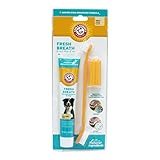
Arm & Hammer Fresh Breath Dental Kit for Dogs
Arm & Hammer
4. Greenies Original Large Dental Treats — Best Dental Chews
Greenies are the most clinically studied dental chew available — the Veterinary Oral Health Council (VOHC) accepts them for reducing both plaque and tartar, the only dental chew that has passed both criteria in independent testing. The unique texture creates friction against the tooth surface, including at the gumline where soft treats never reach.
Both dogs in testing ate Greenies enthusiastically enough that I had to hide the bag. The Beagle considers his Greenie the morning reward for tolerating the toothbrush.
Important: Greenies are a supplement to brushing, not a replacement. For dogs that genuinely won't tolerate any brushing, daily Greenies are the single most effective alternative.
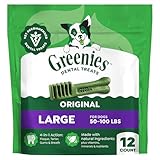
Greenies Original Large Natural Dog Dental Treats
Greenies
5. TropiClean Fresh Breath Water Additive — Best Water Additive
One capful in the water bowl daily. That's the entire effort required. TropiClean's water additive uses natural actives to inhibit the bacteria responsible for both bad breath and early plaque formation. It's tasteless — both my dogs drink normally from treated water without any change in consumption.
Water additives won't replace brushing for dogs with existing tartar buildup, but as a daily baseline they produce measurable breath improvement and slow new plaque formation. The VOHC accepts TropiClean Fresh Breath for plaque control.
In my own routine, the water additive is the layer I added after brushing and Greenies — the belt-and-braces approach for a dog I care about keeping healthy into old age.
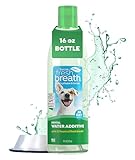
TropiClean Fresh Breath Water Additive for Dogs 473ml
TropiClean
Building a Realistic Dental Routine
Ideal daily routine (3 minutes):
- Apply Virbac CET toothpaste to brush, brush for 60–90 seconds focusing on the gumline
- One Greenies treat as a post-brush reward
- TropiClean in the water bowl (refill at the same time each day)
For brush-resistant dogs:
- Petkin dental wipes 3–5 times per week
- Daily Greenies
- TropiClean water additive daily
Minimum effective approach: Daily Greenies + water additive — significantly better than no dental care, even if brushing isn't yet possible.
How to Introduce Dental Brushing to a Resistant Dog
- Week 1: Let your dog lick the toothpaste from your finger at the same time each day. Don't touch the teeth yet.
- Week 2: Introduce the finger brush with toothpaste. Gently rub the outer surfaces of a few front teeth for 5–10 seconds. Stop before the dog wants you to.
- Week 3: Extend to 30 seconds on outer surfaces. Begin approaching the back teeth.
- Week 4: Introduce the standard toothbrush. If the dog resists, go back to the finger brush for another week.
- Weeks 5–6: Build to a full mouth — outer surfaces of all teeth, angling the brush toward the gumline. 60–90 seconds total.
The gumline is where periodontal disease starts. Getting the brush angled at 45° toward the gum is more important than covering every tooth surface.
Frequently Asked Questions
How often should I brush my dog's teeth?
Daily is ideal. Three times per week produces a meaningful reduction in disease risk. Once per week is better than never, but research shows it's not sufficient to prevent tartar accumulation. Build the habit by linking it to something you already do daily.
My dog already has yellow teeth. Is it too late to start?
Not at all. Brushing prevents new plaque hardening into tartar. It cannot remove existing calcified tartar — that requires a professional dental cleaning under anaesthetic. Start brushing now, and your vet will likely find less work to do at the next cleaning.
Can I use human toothpaste on my dog?
No. Human toothpaste contains fluoride, which is toxic to dogs in the quantities they'd ingest. It also often contains xylitol — a sweetener that is extremely toxic to dogs and can cause rapid liver failure. Never use human toothpaste on a dog.
What age should I start a dental routine?
As early as possible — ideally from 8 weeks. Puppies that grow up with teeth-handling as part of their daily routine accept it easily as adults. For adult rescues, the introduction process above typically takes 4–8 weeks.
Our Verdict
For dogs that accept brushing: Virbac CET Enzymatic Toothpaste is the most clinically effective daily product available in the UK. For dogs that won't tolerate a brush: Petkin Dental Wipes + Greenies + TropiClean Water Additive is the most effective non-brushing routine. For anyone starting from scratch: the Arm & Hammer kit provides everything you need for the first 4–6 weeks.
Start today, regardless of your dog's age. The professional dental cleaning bill is far more expensive than the routine that prevents it.
Related Articles
- Best Dog Food 2026 — diet quality directly affects plaque and tartar buildup
- Best Dog Toys for Aggressive Chewers 2026 — chewing activity also contributes to natural dental cleaning
- Best Dog Shampoo 2026 — dental care is one component of a complete grooming routine